
Ensuring privacy compliance in clinical trials is crucial for protecting participants’ personal data. The regulatory frameworks in the United States (US) and the European Union (EU)* have distinct differences that significantly impact how privacy is managed. For global clinical trials, it is essential to understand these differences and similarities to achieve the highest level of compliance in each region. Here are the top 10 differences between US and EU privacy compliance in the context of clinical trials:
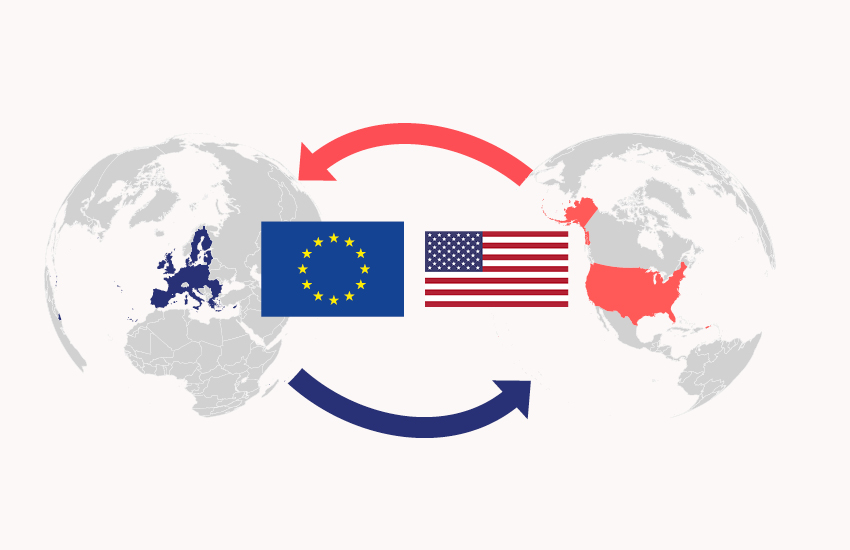
1. Regulatory Framework
In the United States and the European Union, privacy regulations for clinical trials protect participants’ personal data through specific frameworks.
In the US, the primary regulation is the Health Insurance Portability and Accountability Act (HIPAA), which sets national standards for protecting medical records and personal health information. HIPAA applies to health plans, healthcare clearinghouses, healthcare providers, and their business associates. The Common Rule governs the ethical conduct of federally funded research involving human subjects, requiring Institutional Review Boards (IRBs) to oversee clinical trials and ensure participants’ rights and welfare. Additionally, 21 CFR Part 50 outlines the requirements for informed consent, ensuring participants are fully informed and voluntarily consent to participate and 21 CRF Part 11, outlines the requirements for electronic records and electronic signatures in clinical trials and other FDA-regulated activities.
In the EU, the General Data Protection Regulation (GDPR) governs how personal data is processed by organizations in the EU or by foreign entities offering goods or services to, or monitoring the behavior of, EU individuals. The Clinical Trials Regulation (CTR) (EU No 536/2014) harmonizes the conduct of clinical trials across the EU, ensuring participant safety, rights, and data protection compliance with GDPR. Local laws in EU countries may complement the GDPR with additional requirements to further enhance data protection. Organizations must consider these local regulations to ensure comprehensive compliance when processing personal data in clinical trials.

2. Scope of Application
HIPAA applies specifically to US covered entities and their business associates, targeting organizations directly involved in healthcare services, such as hospitals. Clinical trial sponsors are generally not considered business associates under HIPAA because they typically do not perform HIPAA-defined service functions or activities on behalf of research facilities. Therefore, they are not directly subject to HIPAA rules. They are though subject to 21 CFR Part 50 and Part 11, so will need to ensure a statement of confidentiality is included, as well as trial data is secure.
In contrast, GDPR applies to any organization processing personal data of individuals within the EU, regardless of the organization’s location. This encompasses a much wider array of entities and sectors, including global clinical trial sponsors. This broad scope means that GDPR regulations apply to any entity handling EU citizens’ personal data, ensuring comprehensive data protection across various stakeholders (i.e. sponsors, hospitals, service providers).
3. Definition of Personal Data
Under HIPAA, the focus is on “protected health information” (PHI), which includes individually identifiable health information held by covered entities. GDPR defines personal data more broadly as any information relating to an identified or identifiable natural person, including health data. This broader definition under GDPR means that more types of data and individuals fall under its purview compared to HIPAA, including apart from trial participants, the Investigators and other members of the study team.
4. Anonymization and Pseudonymization
Under GDPR, pseudonymized data, where identifiers are replaced with pseudonyms, is still considered personal data because re-identification is possible. True anonymization, where data cannot be re-identified is hardly achieved in the scope of clinical trials. In contrast, HIPAA considers key-coded data as de-identified data, which can be used without legal constraints. This creates a significant difference in how de-identified data is treated, with GDPR maintaining stricter oversight even on pseudonymized data, whereas under US law, de-identified data is excluded from HIPAA scope, meaning that once received by sponsors, data can be used without limitations as its considered anonymized.
5. Legal Basis for Processing Data
GDPR offers multiple legal bases for processing personal data beyond consent. These include, between others, compliance with a legal obligation, performance of a task carried out in the public interest, or the legitimate interests pursued by the data controller or a third party, provided these interests are not overridden by the rights and freedoms of the data subjects – this shall not be confused with the mandatory consent to enroll in the clinical trial as imposed by the Clinical Trials Regulation (CTR).
In contrast, HIPAA primarily focuses on obtaining authorization for the use and disclosure of Protected Health Information (PHI), with 21 CFR Part 50 imposing transparent requirements on sponsors to provide clear information about the uses of the data in the scope of the trial.
6. Data Subject Rights
GDPR grants extensive rights to data subjects, including the rights to access, rectify, erase, restrict processing, and data portability. These rights empower individuals with significant control over their personal data, even though the regulation allows for some limitations in the scope of scientific research. In contrast, HIPAA provides more limited rights, such as the right to access, amend, and receive an accounting of disclosures of their PHI. A significant difference in the scope of clinical trials is that EU trial participants can exercise their rights directly against the sponsor, whereas in the US, the responsibility for granting data protection rights to trial participants lies with the research facilities covered by HIPAA, not the sponsors, who typically only process de-identified data.
7. Data Breach Notification
The requirements for data breach notifications differ significantly between the GDPR and HIPAA. Under GDPR, the controller (often the sponsor) must report data breaches involving personal data to the relevant supervisory authority within 72 hours and notify affected individuals if there is a high risk to their rights and freedoms. In contrast, HIPAA requires covered entities (such as research facilities) to notify affected individuals, the Secretary of Health and Human Services, and, in some cases, the media about breaches involving protected health information (PHI). This highlights a clear distinction: under GDPR, the responsibility for breach notification lies with the sponsor, whereas in the US, it is the research facilities covered by HIPAA that bear this responsibility.
8. Data Protection Officer (DPO)
Under GDPR, organizations that process large volumes of sensitive data or engage in systematic monitoring of individuals must appoint a Data Protection Officer (DPO). The DPO is responsible for overseeing data protection strategies and ensuring compliance with GDPR. In the context of clinical trials, sponsors are generally required to appoint a DPO, as mandated by local data protection laws and authorities. Conversely, HIPAA does not require the appointment of a DPO but does mandate that covered entities designate a privacy officer responsible for developing and implementing privacy policies. This distinction means that, under US law, the responsibility for overseeing data protection falls on the research facility as the covered entity, not the sponsor. Sponsors are typically not required to appoint an officer for data protection in clinical trials since the data they handle is de-identified or anonymized under HIPAA.
9. Cross-Border Data Transfers
GDPR imposes strict rules on transferring personal data outside the EU, requiring mechanisms such as Standard Contractual Clauses (SCCs), Binding Corporate Rules (BCRs), or adequacy decisions to ensure the data is protected to GDPR standards. HIPAA does not have specific provisions for international data transfers but focuses on ensuring compliance with its standards within the US. This difference means that entities subject to the GDPR must navigate additional complexities when engaging in international data transfers.
10. Enforcement and Penalties
The enforcement mechanisms and penalties under GDPR are significantly more stringent than those under HIPAA. GDPR violations can result in fines up to €20 million or 4% of the annual global turnover, whichever is higher. In contrast, HIPAA violations can incur civil and criminal penalties, with fines ranging from $100 to $50,000 per violation, capped annually at $1.5 million. A major distinction is that under GDPR, the responsibility for ensuring compliance with data protection laws in the EU lies with the sponsor, making them liable for any violations and resulting penalties. Conversely, in the US, HIPAA places the responsibility for compliance on the research facility as the covered entity, making them accountable for any breaches and associated penalties.
HIPAA vs. State Privacy Laws
It is important to consider the impact of state privacy laws in the U.S., especially in the context of clinical trials. In recent years, several states, including California, Virginia, Colorado, Connecticut, Utah, and Texas, have enacted comprehensive privacy laws to address growing public concern over data privacy. These laws aim to enhance consumer rights, improve transparency, and impose stricter obligations on businesses.
In the scope of clinical trials, three important clarifications are needed:
- Exemptions for Clinical Trial Data: U.S. state privacy laws typically include specific exemptions for clinical trial data. These exemptions generally apply to data collected, used, or disclosed in research subject to the Federal Policy for the Protection of Human Subjects (the Common Rule), Good Clinical Practice (GCP) guidelines, or FDA requirements.
- De-identified PHI: De-identified Protected Health Information (PHI) is not considered personal data under U.S. state privacy laws. This means that clinical trial sponsors are not subject to these laws when receiving and processing de-identified trial participant data.
- Processing of Medical Staff Data: Sponsors must be aware of state privacy laws regarding the processing of medical staff data, such as CVs and contact details. If they meet the thresholds for annual revenue or the amount of data processed, they must ensure compliance with state privacy laws. However, smaller biopharma companies often do not meet these thresholds.
Despite possibly not meeting current thresholds for revenue or data processing, biopharma companies must remain vigilant and proactive in understanding and adhering to evolving privacy regulations to ensure future compliance and protect sensitive information.
Conclusion
Ensuring privacy compliance in clinical trials is crucial for protecting participants’ personal data. The regulatory frameworks in the United States (US) and the European Union (EU) have significant differences that impact privacy management. In the US, the Health Insurance Portability and Accountability Act (HIPAA) governs the protection of medical records and personal health information, primarily targeting covered entities. Clinical trial sponsors often handle de-identified data and must comply with 21 CFR Part 11, focusing on electronic records’ integrity and security only.
In contrast, the EU’s General Data Protection Regulation (GDPR) imposes strict controls on personal data processing, including clinical trials. The Clinical Trials Regulation (CTR) harmonizes trial conduct across the EU, ensuring comprehensive data protection. GDPR’s broad scope includes pseudonymized data, requiring stringent protection measures and compliance with local laws that may impose additional requirements.
Given these regulatory differences, US entities conducting clinical trials in the EU must ensure proper GDPR compliance, including appointing a Data Protection Officer (DPO) to oversee data protection strategies. This helps meet all data protection requirements and clarifies the sponsor’s responsibilities.
Understanding and navigating these complex regulatory landscapes is vital for organizations to ensure compliance and safeguard participant data. Aligning practices with both US and EU regulations enables sponsors to effectively manage responsibilities and protect trial participants’ privacy worldwide.
* For the purposes of this article, any reference to the EU or GDPR applicability shall include countries within the EEA and the UK.

Diana is the Founder & Managing Director at RD Privacy and a contributing columnist, specializing in privacy for the pharmaceuticals and life science sectors, particularly small biopharma companies, with extensive experience as a European qualified privacy attorney and Data Protection Officer (DPO).